Driving force is drives the environment or particular project into a lead of success in the driving force we include surveying the people opinion, reading the people minds accurately and drove them into a successful governance
our success rate is 100% because the strategical methods that we follow the driving force that we drove exceptionally unique under no one following in our country currently source our survey.Kindly experience our strategical methods under driving forces to enable us to make good part for our democracy to be implemented according to the people’s choice
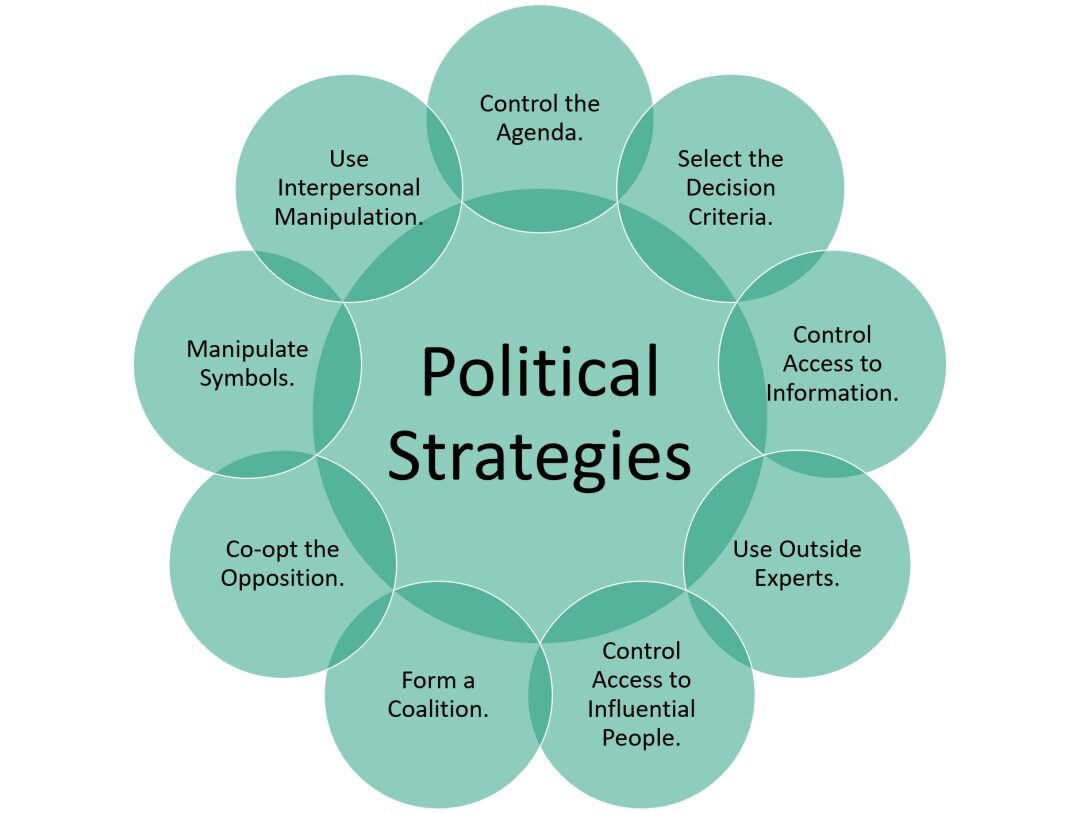
Control the Agenda
The decisions made in most committee meetings depend not only on the opinions of the committee members but also on whether the committee has time to make the decision.
Decisions can be stalled by removing items from the agenda or manipulated by placing them in particular places on the agenda.
The items at the beginning of an agenda are typically discussed in greater detail, allowing greater tolerance for ambiguity and broader consideration of empirical information than items placed at the end of the agenda. Many items at the end of the agenda are either superficially decided or completely overlooked.
Select the Decision Criteria
People generally try to make decisions according to some type of objective criteria.
Therefore, individuals who can change the criteria for making the decision can control the decision as well. Decision-making can be easily manipulated by the selective use of objective criteria. In any decision-making situation, multiple measures are available for assessing alternatives.
Rather than arguing for one’s preferred alternative, a more effective political strategy is to suggest that the decision should be based on the criteria favoring the preferred alternative.
Control Access to Information
Information is a powerful weapon in a fight for power, and those who have access to information or who have the capacity to filter or manipulate information can often succeed in controlling decisions.
Sales projections, salary information, quality reports, and many other items of information are frequently treated as confidential information in order to increase the political power of those possessing the information.
Labor management negotiations are also filled with distrust because each side attempts to manipulate the information to increase its power.
Although the information is frequently manipulated intentionally as a political power strategy, this process occurs most frequently in an innocent way.
Use Outside Experts
Outside experts can usually be found to support any point of view, regardless of the issue.
Therefore, individuals can influence the outcome of the decision by carefully selecting the right outside expert and providing a forum for that individual to express an opinion.
The use of outside experts as a political strategy is particularly obvious in jury trials, where the names and reputations of the experts are more important than the substance of the testimony.
Control Access to Influential People
Many great ideas and quality suggestions are killed or ignored because they never reach the people who have the capacity to do anything with the new ideas and often rock the boat and threaten people’s jobs.
Middle managers often succeed in preventing lower-level members from submitting creative ideas or constructive criticisms from communicating with top management.
Communicating regularly with top management members increases one’s ability to use power, whether the interaction comes from a scheduled meeting or commuting to work together.
Form a Coalition
When groups of individuals discover they lack the power to influence the decision process, they can increase their power by forming a coalition with other groups.
Coalitions are typically formed to maximize the rewards or outcomes for the group and its members.
Therefore, most coalitions are comprised of the minimum number of members required to achieve a successful decision. Coalitions tend to be unstable and temporary unless there are philosophical or ideological commonalities that keep the parties together.
Co-opt the Opposition
The strategy of co-opting is similar to the strategy of forming a coalition.
However, co-optation generally refers to an enduring relationship rather than a temporary alliance of a coalition. Co-opting occurs, for example, when a sub Unit asks a local critic to join their group and work with them in solving their problems.
School systems, hospitals, and other civic organizations use a co-opting strategy of placing influential citizens on their boards of directors to reduce their uncertainty and minimize outside criticism.
Manipulate Symbols
Politics, either in organizations or in government, has a language designed to rationalize and justify decisions by using the appropriate symbolic labels. Without this legitimization, exercising power would be unacceptable and create resistance.
Political actors need to use appropriate language and symbols to generate support when their decisions are made based on power. Decisions that are largely based on power can often be made to appear as though they resulted from rational decision-making.
Use Interpersonal Manipulation
Perhaps the most blatant political strategy is when people directly pursue their goals through persuasion, manipulation, or integration.
Persuasion is an overt attempt to influence others by asking for cooperation and providing information supporting the request. There is no effort to conceal the intentions of the persuaded, and most importantly, the information is considered accurate.
There is a difference between persuasion and manipulation. Both involve the presentation of information designed to obtain one’s desired goal. In manipulation, however, the intent of the person is concealed from the other person, and critical information is either distorted or withheld to influence the decision.
Ingratiation is a form of interpersonal manipulation that is accomplished through flattery and a display of sincerity.
Flattery is a form of positive reinforcement designed to alter the target person’s perception of the flatterer. The most direct form of integration is when person A goes to person B and makes flattering comments.
However, the effectiveness of this strategy is limited since person B may be skeptical of person A’s motives. A more effective strategy is for person A to make flattering comments about person B to someone else, who could be expected to report the comments back to person B.
Flattering comments by person A do not create suspicion if they come through person C.
With a clear understanding of 9 types of political strategies; for more learning use our complete guideline on organizational behavior.
what political strategits do?
The job of political strategist really developed in the last half of the 20th century because of technology such as TV, radio and the Internet. Through the media, politicians were able to get their message across to the public quickly.
Political strategists are also known as political consultants, campaign managers and pollsters. They work in many levels of government. They advise politicians during a campaign and sometimes keep working during their term in office. They judge what the people want from their leaders and how they might react to new policies.
To help direct campaigns, these strategists put polls together, write direct-mail letters, create TV and radio advertisements and put up political web pages.
Using the media to direct campaigns and get exposure for candidates is a key job for political strategists. Sometimes, they also use the media to spread negative information about their opponents.
Political campaigns are run for many positions at the local, state and federal levels. Examples of candidates who may use political strategists are mayors, governors and senators.
When a campaign is up and running, political strategists work long, grueling hours. It’s their job to keep ahead of the competition, to produce new strategies for each day and to manage the campaign. Work in the evenings and on weekends is essential.
Running a campaign is stressful work. It may require a great deal of travel. Political strategists need to be energetic and ready to work on the go.
- You might put polls together, create TV and radio ads and set up web pages
- During a campaign, political strategists work very long hours
- A university education in political science, public relations and government policies is helpful
For a successful political campaign, remember to allocate 20% of your effort towards strategy and 80% towards implementation. To ensure you’re on the right track, start planning that 20% strategy right from the beginning. By doing so, you’ll set yourself up for success and create a roadmap to follow.